销售服务热线:
服务热线:
News
NEWSAny discussion of laboratory equipment has to begin with a definition, because the category covers everything from a bench-mounted pipette to a fully fitted suite of casework and containment. In practice, the term refers to the fixed, installed and free-standing hardware a laboratory occupies in order to do its work: work surfaces and casework, ventilation and containment systems, sample storage, analytical instruments, weighing and measurement devices, and the safety infrastructure that protects people when a procedure goes wrong. It normally excludes consumables, reagents and the information systems that drive them. That distinction matters commercially, since service intervals, calibration cycles and depreciation are tracked against capital assets, while consumables are expensed against the sample budget. Manufacturers typically operate across several layers at once: a single bench, a fume hood, a room-fitted package, or a complete laboratory delivered as a coordinated scheme. Buyers should establish early which layer a quotation covers, because responsibility for utilities, installation, verification and documentation changes dramatically between a product sale and a turnkey project.
Categorising equipment by function rather than by product name makes it far easier to build a specification and to compare quotations on equal terms. The categories below are the ones that appear in almost every laboratory of any discipline, from a small teaching facility to a busy production or research unit. Each has a different dominant performance criterion, and those differences explain why two laboratories that appear to need identical equipment end up with very different budgets.
| Category | Typical items | Dominant performance driver |
|---|---|---|
| Benches and casework | Worktops, base and wall cabinets, sink units, service spines | Chemical resistance, load capacity, service access |
| Ventilation and containment | Fume hoods, biosafety cabinets, local exhaust, gas detection | Containment performance, face velocity, noise |
| Storage | Chemical, flammable and reagent cabinets, sample and ultra-low freezers | Segregation, temperature stability, monitoring |
| Weighing | Analytical and precision balances, weighing tables | Stability, draught shielding, levelling |
| Processing | Autoclaves, incubators, centrifuges, drying ovens | Uniformity, capacity, containment |
| Measurement | Spectrophotometers, chromatography systems, readers | Accuracy, resolution, method support |
| Handling | Pipettes, glassware, plasticware, decanting aids | Calibration stability, ergonomics |
| Safety | Emergency showers, eyewash stations, spill kits, first aid | Response time, reach, visibility |
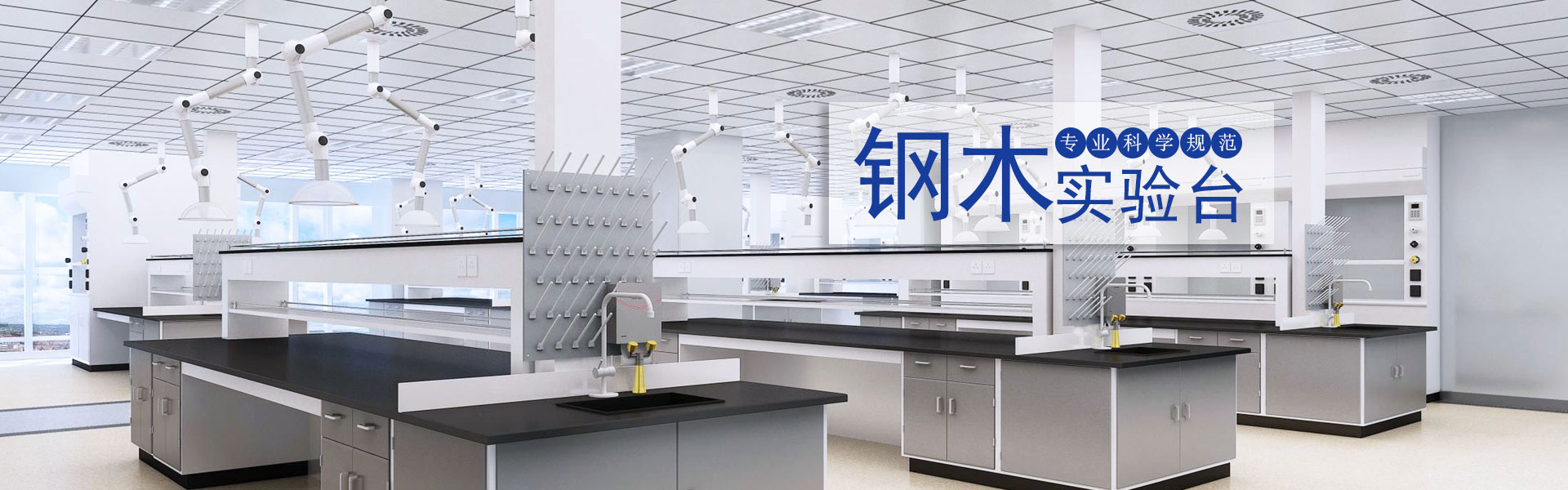
Benches and casework form the structural foundation of a laboratory and are usually the largest single line in an equipment budget once worktops, sinks and services are counted. Worktop material is the decisive specification: epoxy resin suits most routine chemical handling, stainless steel is preferred where heavy loads, heat or aggressive cleaning occur, and dedicated chemical-resistant surfaces are needed around strong oxidising agents. Base cabinets must be configured around the actual workflow, with drawer and door arrangements matched to how technicians reach, store and dispose of material, and internal fittings designed so that piping and electrical services remain reachable without dismantling the carcass. Sink and service units deserve the same attention, since drainage positions, water supply and gas lines determine where a bench can be placed at all. Casework should be specified with the equipment that will sit on or in it rather than separately, and with a clear tolerance for service gaps and service access panels, otherwise routine maintenance turns into a destructive event.
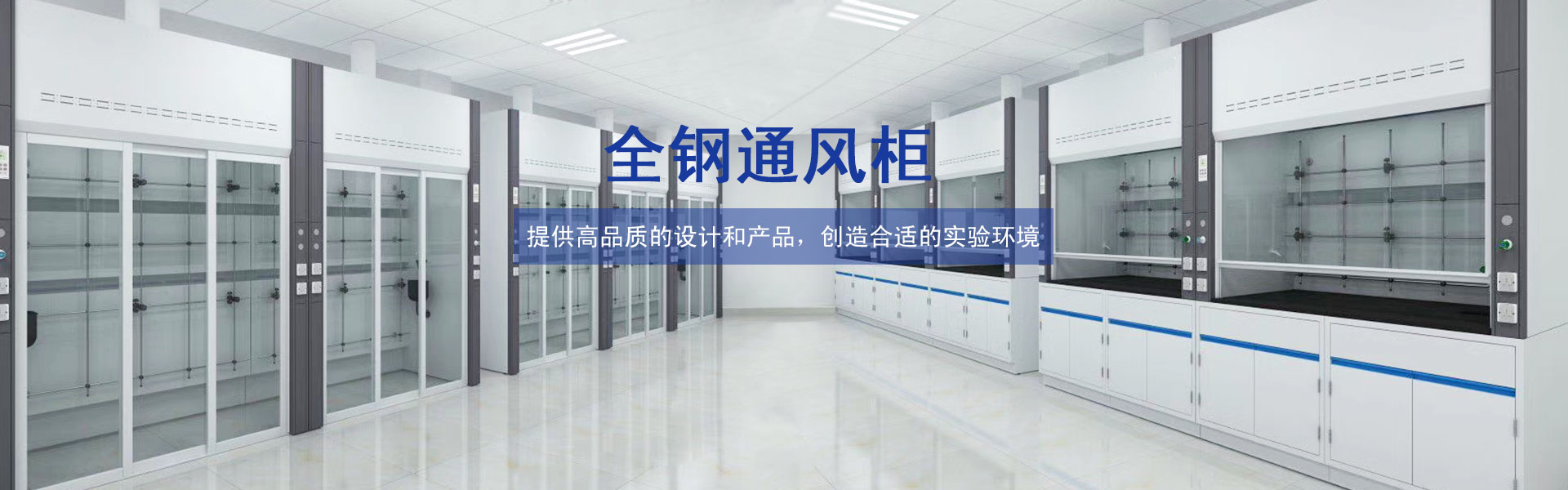
Fume hoods and local exhaust systems protect both the operator and the building, and they are the area where generic specification language most often leads to disappointment. The key questions are what the hood is rated to handle in terms of chemical compatibility and thermal load, what airflow pattern it maintains across the working opening, and how the exhaust rate relates to the building's own ventilation capacity. Under-diluted rooms, recirculating air systems and tightly insulated new buildings all change the achievable performance, so a hood should be matched to its installation environment rather than to a catalogue list. A safety shower and eyewash station must sit within seconds of the hazard, with unobstructed access, and should be considered alongside sink and bench layout instead of being added later. Segregated storage for flammables and corrosives, gas detection with remote indication, and spill containment complete the safety layer.
| System | Suits | Key design feature | Common failure mode |
|---|---|---|---|
| Ducted fume hood | Volatile organics, general chemistry | Constant exhaust to roof, adjustable baffles | Face velocity drift after duct changes |
| High-heat hood | Solvents with high thermal load | Heated extraction, insulated body | Exhaust cooling affecting other rooms |
| Biosafety cabinet | Living or biohazardous material | Directional airflow, HEPA filtration | Filter loading and airflow decay |
| Local exhaust arm | Point-of-source capture | Adjustable articulated arm | Capture distance set too large |
| Storage cabinet | Flammable or corrosive stock | Fire-rated or acid-resistant lining | Stock volume exceeds tested rating |
Balances sit at the point where a measurement becomes a record, and their accuracy is only as good as the environment around them. Analytical balances need a draught-free position, vibration isolation, stable temperature and a dedicated power outlet; weighing tables and marble or granite-topped platforms exist precisely to provide those conditions where room space is limited. Precision and semi-micro balances are normally unventilated with a draft shield, while floor and platform scales are a different category entirely and should not be compared directly with bench instruments. Elsewhere in the processing group, autoclaves depend on correctly specified steam supply, drainage and adequate floor loading, and their chamber volume should reflect realistic load geometry rather than nominal litres. Incubators demand uniform temperature distribution, recovery time after door opening and low heat loss, which is where insulation and airflow design separate good units from poor ones. Centrifuges are defined by rotor type, relative centrifugal force, imbalance protection and noise, since these factors determine whether a unit can run unattended overnight in a shared room.
Spectrophotometers and chromatography systems sit at the analytical end of the laboratory and are selected on method support rather than on headline specification. For spectrophotometry, the meaningful questions are wavelength range, bandpass, stray light, sample volume handling, cell compatibility and whether the instrument can be validated against the wavelengths your protocols require. Chromatography selection starts with the separation mode in use, then moves to pressure range, detector type, injection volume, data system integration and the real throughput per working day, including changeover time between methods. Around these instruments sits the handling layer: pipettes and dispensers, which need regular calibration against gravimetric or photometric methods to stay within tolerance, and glassware and plasticware chosen for dimensional accuracy, chemical compatibility and traceability. Keeping this layer in view during planning prevents a common failure, where a laboratory invests in sensitive instruments but then limits their effective performance through handling error upstream.
Selecting a supplier is a technical exercise before it is a commercial one. Compare offers using a common specification template so that every quotation answers the same questions about capacity, performance, consumables, service response and documentation. A manufacturer able to talk precisely about airflow, load rating, tolerance bands and interface requirements is usually able to support the equipment afterwards, whereas a supplier whose answer is limited to catalogue features has not understood the installation. Request documentation before purchase: test data, installation requirements, utility demands, spare parts lists, maintenance intervals and the terms of any calibration or performance verification. For laboratories working under an accredited quality system, ask how records, equipment histories and traceability are maintained, and confirm that the evidence format matches what the internal system can absorb without manual re-entry.
| Criterion | What to check | Why it matters |
|---|---|---|
| Technical support | Named engineer, response times, on-site capability | Downtime on critical instruments |
| Documentation | Manuals, test certificates, service records format | Accreditation and audit readiness |
| Parts and consumables | Availability, lead time, interchangeability | Running cost over the asset life |
| Installation scope | Who handles utilities, structural work, certification | Hidden cost and delay |
| Verification support | Commissioning tests, calibration, performance records | Evidence of fitness for use |
| Flexibility | Modularity, upgrade paths, reconfiguration | Future lab changes |
The purchase price of laboratory equipment is rarely the dominant cost across a five-year cycle. Installation, utilities, building modifications, validation, operator training and planned maintenance together routinely exceed the equipment cost itself, which is why a comparison limited to unit price misleads. A full lifecycle view separates capital purchase from operational running costs: filters and other consumables, energy draw, service contracts, calibration, spare parts and eventual replacement of high-wear components. Two decisions drive most of this: how many pieces of equipment the workflow genuinely needs, and whether shared or multi-user arrangements can absorb peaks in demand without every user owning a dedicated unit. Where a task runs intermittently, a shared instrument in a central area often costs less and performs better than several lightly used machines distributed across benches. Set a maintenance budget as a percentage of capital value at the outset rather than as a reaction to breakdowns, and record downtime cost in hours so that reliability becomes a financial argument rather than a preference.
Laboratory layout should be driven by workflow and service requirements rather than by the dimensions of available floor space. The reliable sequence begins with a process map: sample arrival, preparation, analysis, storage, waste removal and the movement of people and material between them. From that map, assign each zone its equipment list, then overlay the services each item needs, including electrical load and phase, dedicated circuits, drainage, water, exhaust and gas, floor loading and headroom. Only then place furniture, keeping containment devices away from high-traffic routes and positioning heavy equipment where it can be delivered and later removed without demolishing the room. Reserve space for maintenance access, for the movement of carts and trolleys, and for the growth of the laboratory over its life. Commission the room before the equipment arrives, and treat the layout drawing as a live document that travels with the order.
| Planning step | Input required | Output |
|---|---|---|
| Process mapping | Workload, sample flows, staffing | Zoned workflow diagram |
| Equipment schedule | Task-by-task equipment list | Quantity and specification schedule |
| Utility audit | Load, drainage, ventilation data | Services and capacity assessment |
| Layout and zoning | Room dimensions, egress, zoning rules | Scaled general arrangement drawing |
| Specification issue | All of the above | Issued specification and tender pack |
| Verification plan | Acceptance criteria per item | Commissioning and acceptance schedule |
The answer follows the process map rather than any standard number. Start from the tasks and their volumes, identify which steps can share a device, and only then count units. Most over-specified laboratories end up with under-used instruments and constrained bench space, while under-specified ones experience queues at the busiest station.
Furniture is designed for seating, storage and support and carries static loads. Equipment is designed to perform a measurement or a process and has defined performance, tolerances, utility needs and service cycles. The two meet in practice, since benches must host instruments and be engineered around their weight, heat and service access.
New procurement suits critical, high-throughput or newly defined workloads. Refurbished equipment can suit non-critical or short-term needs, provided that condition, calibration history and remaining service life are documented and verified before handover. Mixing sources within one laboratory also complicates maintenance and training.
Service life varies widely by category and by how intensively the unit is used, with heavily used mechanical and thermal equipment often needing attention long before frame-based items are retired. Planning for condition-based replacement of components and a periodic review of the installed base is more reliable than assuming a fixed life for every category.
相关文档